The Story of the Bad Little Boy
Original story published 1865 · In the public domain
Annotations and modern retelling © 2026 R. M. Hume
Before Jim does a single bad thing, know what he is up against. Not his mother, not the law. The Sunday-school book.
In the moral tales Twain grew up on, the bad boy is a fixed machine. He sins, a terrible feeling comes over him, he repents, and he is forgiven with tears. Or he does not repent, and he drowns, or breaks his arm, or is struck by lightning. The wages of sin are paid on the page, every time, without fail. That reliability was the whole comfort the books offered, and it is exactly what Twain takes away.
His method is simple and he never varies it. He tells you precisely how the story is supposed to go, in full, and then reports that it did not go that way. The boy steals the jam and no small voice speaks. He robs the orchard and comes down whole. He breaks the Sabbath and the lightning misses. Each time the promised punishment is described in loving detail and then quietly withheld.
Watch what the stacking does. One reversal is a joke. A dozen of them, deadpan and in a row, turn into an argument. The books were lying. Goodness and good luck have nothing to do with each other, and the world hands its rewards to whoever grabs them. The last line puts Jim in the legislature, and by then you are not surprised.
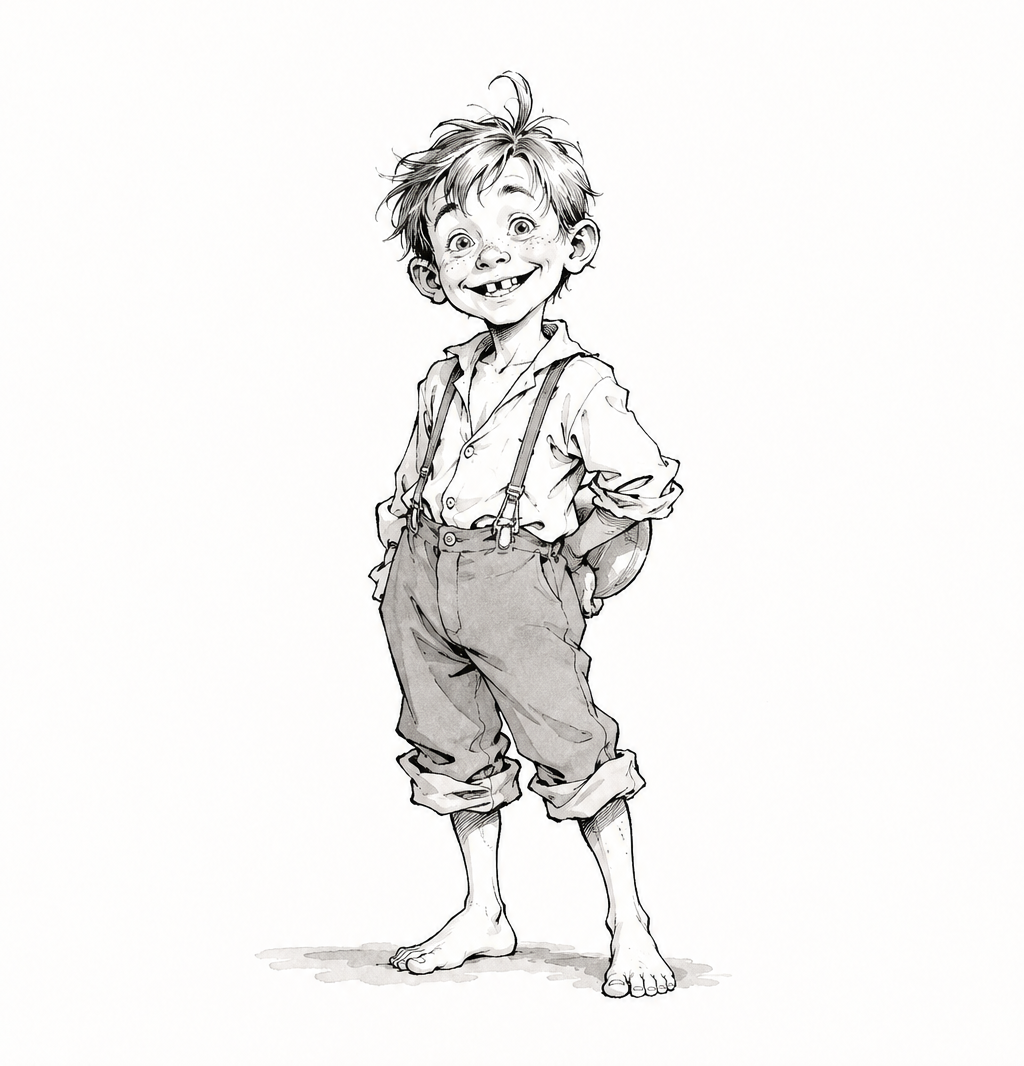
The Story of the Bad Little Boy
As Mark Twain wrote it, 1865
Once there was a bad little boy whose name was Jim—though, if you will notice, you will find that bad little boys are nearly always called James in your Sunday-school books. It was strange, but still it was true, that this one was called Jim.
He didn’t have any sick mother, either—a sick mother who was pious and had the consumption, and would be glad to lie down in the grave and be at rest but for the strong love she bore her boy, and the anxiety she felt that the world might be harsh and cold toward him when she was gone. Most bad boys in the Sunday books are named James, and have sick mothers, who teach them to say, “Now, I lay me down,” etc., and sing them to sleep with sweet, plaintive voices, and then kiss them good night, and kneel down by the bedside and weep. But it was different with this fellow. He was named Jim, and there wasn’t anything the matter with his mother—no consumption, nor anything of that kind. She was rather stout than otherwise, and she was not pious; moreover, she was not anxious on Jim’s account. She said if he were to break his neck it wouldn’t be much loss. She always spanked Jim to sleep, and she never kissed him good night; on the contrary, she boxed his ears when she was ready to leave him.
Once this little bad boy stole the key of the pantry, and slipped in there and helped himself to some jam, and filled up the vessel with tar, so that his mother would never know the difference; but all at once a terrible feeling didn’t come over him, and something didn’t seem to whisper to him, “Is it right to disobey my mother? Isn’t it sinful to do this? Where do bad little boys go who gobble up their good kind mother’s jam?” and then he didn’t kneel down all alone and promise never to be wicked any more, and rise up with a light, happy heart, and go and tell his mother all about it, and beg her forgiveness, and be blessed by her with tears of pride and thankfulness in her eyes. No; that is the way with all other bad boys in the books; but it happened otherwise with this Jim, strangely enough. He ate that jam, and said it was bully, in his sinful, vulgar way; and he put in the tar, and said that was bully also, and laughed, and observed “that the old woman would get up and snort” when she found it out; and when she did find it out, he denied knowing anything about it, and she whipped him severely, and he did the crying himself. Everything about this boy was curious—everything turned out differently with him from the way it does to the bad Jameses in the books.
Once he climbed up in Farmer Acorn’s apple tree to steal apples, and the limb didn’t break, and he didn’t fall and break his arm, and get torn by the farmer’s great dog, and then languish on a sickbed for weeks, and repent and become good. Oh, no; he stole as many apples as he wanted and came down all right; and he was all ready for the dog, too, and knocked him endways with a brick when he came to tear him. It was very strange—nothing like it ever happened in those mild little books with marbled backs, and with pictures in them of men with swallow-tailed coats and bell-crowned hats, and pantaloons that are short in the legs, and women with the waists of their dresses under their arms, and no hoops on. Nothing like it in any of the Sunday-school books.
Once he stole the teacher’s penknife, and, when he was afraid it would be found out and he would get whipped, he slipped it into George Wilson’s cap—poor Widow Wilson’s son, the moral boy, the good little boy of the village, who always obeyed his mother, and never told an untruth, and was fond of his lessons, and infatuated with Sunday-school. And when the knife dropped from the cap, and poor George hung his head and blushed, as if in conscious guilt, and the grieved teacher charged the theft upon him, and was just in the very act of bringing the switch down upon his trembling shoulders, a white-haired, improbable justice of the peace did not suddenly appear in their midst, and strike an attitude and say, “Spare this noble boy—there stands the cowering culprit! I was passing the school door at recess, and, unseen myself, I saw the theft committed!” And then Jim didn’t get whaled, and the venerable justice didn’t read the tearful school a homily, and take George by the hand and say such a boy deserved to be exalted, and then tell him to come and make his home with him, and sweep out the office, and make fires, and run errands, and chop wood, and study law, and help his wife do household labors, and have all the balance of the time to play, and get forty cents a month, and be happy. No; it would have happened that way in the books, but didn’t happen that way to Jim. No meddling old clam of a justice dropped in to make trouble, and so the model boy George got thrashed, and Jim was glad of it because, you know, Jim hated moral boys. Jim said he was “down on them milksops.” Such was the coarse language of this bad, neglected boy.
But the strangest thing that ever happened to Jim was the time he went boating on Sunday, and didn’t get drowned, and that other time that he got caught out in the storm when he was fishing on Sunday, and didn’t get struck by lightning. Why, you might look, and look, all through the Sunday-school books from now till next Christmas, and you would never come across anything like this. Oh, no; you would find that all the bad boys who go boating on Sunday invariably get drowned; and all the bad boys who get caught out in storms when they are fishing on Sunday infallibly get struck by lightning. Boats with bad boys in them always upset on Sunday, and it always storms when bad boys go fishing on the Sabbath. How this Jim ever escaped is a mystery to me.
This Jim bore a charmed life—that must have been the way of it. Nothing could hurt him. He even gave the elephant in the menagerie a plug of tobacco, and the elephant didn’t knock the top of his head off with his trunk. He browsed around the cupboard after essence-of peppermint, and didn’t make a mistake and drink aqua fortis. He stole his father’s gun and went hunting on the Sabbath, and didn’t shoot three or four of his fingers off. He struck his little sister on the temple with his fist when he was angry, and she didn’t linger in pain through long summer days, and die with sweet words of forgiveness upon her lips that redoubled the anguish of his breaking heart. No; she got over it. He ran off and went to sea at last, and didn’t come back and find himself sad and alone in the world, his loved ones sleeping in the quiet churchyard, and the vine-embowered home of his boyhood tumbled down and gone to decay. Ah, no; he came home as drunk as a piper, and got into the station-house the first thing.
And he grew up and married, and raised a large family, and brained them all with an ax one night, and got wealthy by all manner of cheating and rascality; and now he is the infernalest wickedest scoundrel in his native village, and is universally respected, and belongs to the legislature.
So you see there never was a bad James in the Sunday-school books that had such a streak of luck as this sinful Jim with the charmed life.
The Story of the Bad Little Boy, Told Once More
A modern retelling by R. M. Hume
Once there was a bad little boy named Jim. This is worth noting, because in the Sunday-school books the bad boy is always named James, and always has a sick, saintly mother wasting away of consumption, who teaches him his prayers and weeps at his bedside. Jim had none of that. His mother was stout and healthy and not the least bit anxious about him. If he broke his neck, she said, it would not be much of a loss. She spanked him to sleep and boxed his ears for good night.
In the books, when a boy steals the jam and tops off the jar with tar, a terrible feeling comes over him, and a small voice asks whether it is right to grieve his dear mother, and he kneels and repents and confesses and is forgiven with tears of pride. Jim ate the jam, said it was fine, poured in the tar, said that was fine too, and looked forward to his mother’s face when she found it. When she found it, he denied everything. She whipped him, and it was Jim who did the crying. Nothing about the boy went the way the books promised.
In the books, the boy who climbs the farmer’s apple tree falls, breaks his arm, is torn by the dog, and languishes on a sickbed until he repents. Jim took all the apples he wanted, came down whole, and was ready for the dog besides. It simply did not happen the way it did in the mild little volumes with the marbled backs.
In the books, when a stolen penknife is slipped into an innocent boy’s cap, a white-haired justice of the peace appears from nowhere at the very last instant to save him and denounce the true culprit. Jim slipped the teacher’s penknife into George Wilson’s cap, George the model boy, the good boy of the village. No justice appeared. George got thrashed. Jim was glad, because Jim had no use for model boys.
In the books, bad boys who go boating on Sunday drown, and bad boys caught fishing in a Sabbath storm are struck by lightning, without fail. Jim went boating on Sunday and did not drown. He was caught out fishing in a storm and was not struck. How he escaped is a mystery.
He bore a charmed life. He gave the menagerie elephant a plug of tobacco and the elephant did not take the top of his head off. He was rotten to his little sister, and she got over it, when in any proper book she would have died forgiving him and left him heartbroken for life. He ran off to sea and did not come home to find his loved ones in the quiet churchyard and the old home gone to ruin. He came home drunk and spent the night in the station-house.
And he grew up, and married, and got rich by every manner of cheating and rascality, and is now the wickedest scoundrel in his native village, and is universally respected, and belongs to the legislature.
So you see, there never was a bad James in all the Sunday-school books with a streak of luck to touch this sinful Jim.
What Twain Was Doing
Twain wrote this in 1865, early in his career, and it is one of the first times he runs a machine he would use for the rest of his life. Take a form the reader knows cold, state its rules out loud, and then break them one at a time with a straight face.
The form here is the Sunday-school book. Readers in 1865 knew the type well, cheap moral tales where the bad boy is punished and the good boy rewarded, on schedule. Twain does not argue with the form. He inhabits it. He lays out exactly what is supposed to happen, in the books’ own sentimental language, the sick mother, the small voice, the white-haired justice arriving at the last instant, and then reports that none of it occurred.
The comedy lives in that gap, and it widens on purpose. The first reversal is a surprise. By the fifth or sixth the reader is ahead of him, waiting for the promised doom and enjoying its absence. Twain holds the deadpan the whole way. He never winks and never says the books are foolish. He lets Jim walk away from every consequence until the pattern makes the point for him.
And the point is not gentle. Take out the jokes and the sketch says the moral tales lied, that the tie between virtue and good fortune was a comfort someone invented, and that the real world does not hand out its rewards to whoever deserves them. The last sentence seats Jim in the legislature, respected by all, and the joke and the accusation are the same sentence.
Twain later wrote the other half as a companion, The Story of the Good Little Boy, where virtue is punished as thoroughly as vice is rewarded here. Read together they are one argument. Read alone, this one still lands, because nearly everyone has held one of those little books and half believed it.
A Note on This Edition
Twain’s words sit here as he wrote them, untouched, with short notes for what has aged out of common knowledge. The new material, the retelling and these notes, was written by R. M. Hume with the help of AI. Hume chose the story, wrote it, and made the editorial calls about what stayed and what changed.
Twain’s 1865 deadpan runs darker than its comic surface. In the original, Jim strikes his little sister, and the closing sentence has him murder his whole family and prosper anyway. Those lines stay in Twain’s text, flagged, because the shock is part of how the satire works. The modern retelling softens both, keeping the joke that nothing ever catches up with Jim while dropping the violence, because this edition is meant to work for a wider and younger audience than Twain was writing for.
This joins the first five stories in Mark Twain in an AI World, alongside The Celebrated Jumping Frog of Calaveras County, The Invalid’s Story, Journalism in Tennessee, The Stolen White Elephant, and Baker’s Blue-Jay Yarn. Each sits beside Twain’s own text, word for word, so you can see exactly what was changed and what was not.
More on Twain’s method: How Twain Said to Tell It → · The Rulebook Twain Hid in an Insult →
Stay in the loop
New Twain editions and the occasional essay, straight to your inbox. Just that, nothing else.
You are joining updates from Mark Twain in an AI World. Just this, nothing else, unsubscribe anytime.