The Story of the Good Little Boy
Original story published 1870 · In the public domain
Annotations and modern retelling © 2026 R. M. Hume
Before Jacob Blivens does a single good deed, know what he is counting on. Not his parents, not his teacher. The Sunday-school book.
In the moral tales Twain grew up on, the good boy is a fixed machine. He obeys, he tells the truth, he gives his pennies to beggars, and he is repaid in full, loved and praised and granted a beautiful death, with a tearful dying speech and a funeral everyone weeps at. Jacob has read every one of those books and believes every word. His whole ambition is to be put in one.
Twain runs the same trick he ran on the bad boy, turned exactly around. He tells you what the books promise the good boy, in their own sentimental language, and then reports that Jacob got the reverse. He warns a boy out of an apple tree and the boy falls on him and breaks his arm. He helps a blind man up and is beaten for it. He rescues a starving dog and is torn to rags. Every virtue the books rewarded turns out to be the worst investment Jacob can make.
Watch what the stacking does. If the bad-boy sketch says wickedness is never punished, this one says goodness is never rewarded. Put the two together and the books were lying in both directions. Jacob keeps his dying speech written and ready to the very end. Watch whether he ever gets to give it.
The Story of the Good Little Boy
As Mark Twain wrote it, published 1870
Once there was a good little boy by the name of Jacob Blivens. He always obeyed his parents, no matter how absurd and unreasonable their demands were; and he always learned his book, and never was late at Sabbath-school. He would not play hookey, even when his sober judgment told him it was the most profitable thing he could do. None of the other boys could ever make that boy out, he acted so strangely. He wouldn’t lie, no matter how convenient it was. He just said it was wrong to lie, and that was sufficient for him. And he was so honest that he was simply ridiculous. The curious ways that that Jacob had, surpassed everything. He wouldn’t play marbles on Sunday, he wouldn’t rob birds’ nests, he wouldn’t give hot pennies to organ-grinders’ monkeys; he didn’t seem to take any interest in any kind of rational amusement. So the other boys used to try to reason it out and come to an understanding of him, but they couldn’t arrive at any satisfactory conclusion. As I said before, they could only figure out a sort of vague idea that he was “afflicted,” and so they took him under their protection, and never allowed any harm to come to him.
This good little boy read all the Sunday-school books; they were his greatest delight. This was the whole secret of it. He believed in the good little boys they put in the Sunday-school book; he had every confidence in them. He longed to come across one of them alive once; but he never did. They all died before his time, maybe. Whenever he read about a particularly good one he turned over quickly to the end to see what became of him, because he wanted to travel thousands of miles and gaze on him; but it wasn’t any use; that good little boy always died in the last chapter, and there was a picture of the funeral, with all his relations and the Sunday-school children standing around the grave in pantaloons that were too short, and bonnets that were too large, and everybody crying into handkerchiefs that had as much as a yard and a half of stuff in them. He was always headed off in this way. He never could see one of those good little boys on account of his always dying in the last chapter.
Jacob had a noble ambition to be put in a Sunday-school book. He wanted to be put in, with pictures representing him gloriously declining to lie to his mother, and her weeping for joy about it; and pictures representing him standing on the doorstep giving a penny to a poor beggar-woman with six children, and telling her to spend it freely, but not to be extravagant, because extravagance is a sin; and pictures of him magnanimously refusing to tell on the bad boy who always lay in wait for him around the corner as he came from school, and welted him so over the head with a lath, and then chased him home, saying, “Hi! hi!” as he proceeded. That was the ambition of young Jacob Blivens. He wished to be put in a Sunday-school book. It made him feel a little uncomfortable sometimes when he reflected that the good little boys always died. He loved to live, you know, and this was the most unpleasant feature about being a Sunday-school-book boy. He knew it was not healthy to be good. He knew it was more fatal than consumption to be so supernaturally good as the boys in the books were; he knew that none of them had ever been able to stand it long, and it pained him to think that if they put him in a book he wouldn’t ever see it, or even if they did get the book out before he died it wouldn’t be popular without any picture of his funeral in the back part of it. It couldn’t be much of a Sunday-school book that couldn’t tell about the advice he gave to the community when he was dying. So at last, of course, he had to make up his mind to do the best he could under the circumstances—to live right, and hang on as long as he could, and have his dying speech all ready when his time came.
But somehow nothing ever went right with the good little boy; nothing ever turned out with him the way it turned out with the good little boys in the books. They always had a good time, and the bad boys had the broken legs; but in his case there was a screw loose somewhere, and it all happened just the other way. When he found Jim Blake stealing apples, and went under the tree to read to him about the bad little boy who fell out of a neighbor’s apple tree and broke his arm, Jim fell out of the tree, too, but he fell on him and broke his arm, and Jim wasn’t hurt at all. Jacob couldn’t understand that. There wasn’t anything in the books like it.
And once, when some bad boys pushed a blind man over in the mud, and Jacob ran to help him up and receive his blessing, the blind man did not give him any blessing at all, but whacked him over the head with his stick and said he would like to catch him shoving him again, and then pretending to help him up. This was not in accordance with any of the books. Jacob looked them all over to see.
One thing that Jacob wanted to do was to find a lame dog that hadn’t any place to stay, and was hungry and persecuted, and bring him home and pet him and have that dog’s imperishable gratitude. And at last he found one and was happy; and he brought him home and fed him, but when he was going to pet him the dog flew at him and tore all the clothes off him except those that were in front, and made a spectacle of him that was astonishing. He examined authorities, but he could not understand the matter. It was of the same breed of dogs that was in the books, but it acted very differently. Whatever this boy did he got into trouble. The very things the boys in the books got rewarded for turned out to be about the most unprofitable things he could invest in.
Once, when he was on his way to Sunday-school, he saw some bad boys starting off pleasuring in a sailboat. He was filled with consternation, because he knew from his reading that boys who went sailing on Sunday invariably got drowned. So he ran out on a raft to warn them, but a log turned with him and slid him into the river. A man got him out pretty soon, and the doctor pumped the water out of him, and gave him a fresh start with his bellows, but he caught cold and lay sick abed nine weeks. But the most unaccountable thing about it was that the bad boys in the boat had a good time all day, and then reached home alive and well in the most surprising manner. Jacob Blivens said there was nothing like these things in the books. He was perfectly dumfounded.
When he got well he was a little discouraged, but he resolved to keep on trying anyhow. He knew that so far his experiences wouldn’t do to go in a book, but he hadn’t yet reached the allotted term of life for good little boys, and he hoped to be able to make a record yet if he could hold on till his time was fully up. If everything else failed he had his dying speech to fall back on.
He examined his authorities, and found that it was now time for him to go to sea as a cabin-boy. He called on a ship-captain and made his application, and when the captain asked for his recommendations he proudly drew out a tract and pointed to the words, “To Jacob Blivens, from his affectionate teacher.” But the captain was a coarse, vulgar man, and he said, “Oh, that be blowed! that wasn’t any proof that he knew how to wash dishes or handle a slush-bucket, and he guessed he didn’t want him.” This was altogether the most extraordinary thing that ever happened to Jacob in all his life. A compliment from a teacher, on a tract, had never failed to move the tenderest emotions of ship-captains, and open the way to all offices of honor and profit in their gift, it never had in any book that ever HE had read. He could hardly believe his senses.
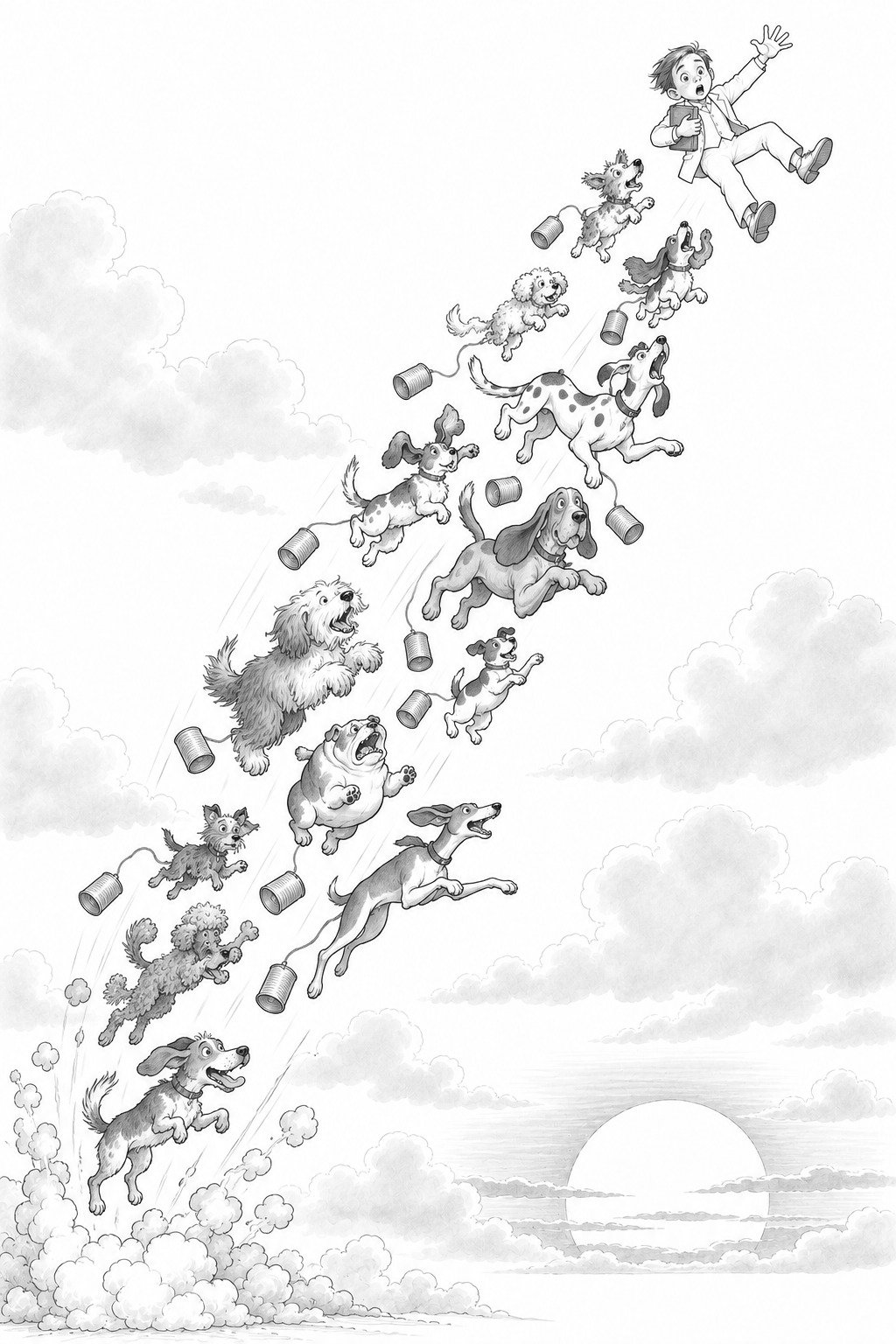
This boy always had a hard time of it. Nothing ever came out according to the authorities with him. At last, one day, when he was around hunting up bad little boys to admonish, he found a lot of them in the old iron-foundry fixing up a little joke on fourteen or fifteen dogs, which they had tied together in long procession, and were going to ornament with empty nitroglycerin cans made fast to their tails. Jacob’s heart was touched. He sat down on one of those cans (for he never minded grease when duty was before him), and he took hold of the foremost dog by the collar, and turned his reproving eye upon wicked Tom Jones. But just at that moment Alderman McWelter, full of wrath, stepped in. All the bad boys ran away, but Jacob Blivens rose in conscious innocence and began one of those stately little Sunday-school-book speeches which always commence with “Oh, sir!” in dead opposition to the fact that no boy, good or bad, ever starts a remark with “Oh, sir.” But the alderman never waited to hear the rest. He took Jacob Blivens by the ear and turned him around, and hit him a whack in the rear with the flat of his hand; and in an instant that good little boy shot out through the roof and soared away toward the sun, with the fragments of those fifteen dogs stringing after him like the tail of a kite. And there wasn’t a sign of that alderman or that old iron-foundry left on the face of the earth; and, as for young Jacob Blivens, he never got a chance to make his last dying speech after all his trouble fixing it up, unless he made it to the birds; because, although the bulk of him came down all right in a tree-top in an adjoining county, the rest of him was apportioned around among four townships, and so they had to hold five inquests on him to find out whether he was dead or not, and how it occurred. You never saw a boy scattered so.—[This glycerin catastrophe is borrowed from a floating newspaper item, whose author’s name I would give if I knew it.—M. T.]
Thus perished the good little boy who did the best he could, but didn’t come out according to the books. Every boy who ever did as he did prospered except him. His case is truly remarkable. It will probably never be accounted for.
The Story of the Good Little Boy, Told Once More
A modern retelling by R. M. Hume
Once there was a good little boy named Jacob Blivens. He always obeyed his parents, however absurd the order, always learned his book, and was never once late to Sabbath-school. He would not lie, even when lying was convenient; he said it was wrong, and that settled it. He would not play marbles on Sunday or rob a bird’s nest, and he took no interest in any rational amusement. The other boys could not make him out at all, and finally decided he was afflicted, and took him under their protection so no harm would come to him.
The whole secret was the books. Jacob read every Sunday-school book there was and believed every word. He longed to meet one of the good little boys from the stories, but he never could, because they all died in the last chapter, under a picture of the funeral, with everyone weeping into enormous handkerchiefs. His great ambition was to be put in such a book himself, with pictures of him nobly refusing to lie and giving pennies to beggars, and a fine dying speech at the end. It did trouble him a little that the good boys always died; being good, he had gathered, was more fatal than consumption. Still he resolved to do the best he could, to live right, hang on as long as he was able, and keep his dying speech ready.
Somehow nothing ever went the way the books promised. When he found Jim Blake up an apple tree and went beneath it to read him the cautionary story of the boy who fell and broke his arm, Jim fell out too, but he fell on Jacob and broke Jacob’s arm, and Jim was not hurt at all. When bad boys shoved a blind man into the mud and Jacob ran to help him up and collect his blessing, the blind man whacked him with his stick for pretending to shove him. When he rescued a hungry lame dog to earn its imperishable gratitude, the dog tore off most of his clothes and made a spectacle of him. The very deeds the boys in the books were rewarded for turned out to be the worst investments Jacob could make.
Seeing bad boys set out sailing on a Sunday, and knowing from his reading that such boys always drown, he ran out on a raft to warn them and slid into the river himself. They pumped him out and he lay sick nine weeks, while the bad boys had a fine day and came home perfectly well. Later he applied to a ship captain as a cabin-boy and proudly offered, as his reference, a tract inscribed to Jacob Blivens from his affectionate teacher. The captain, a coarse man, said that be blowed, and sent him off. Never, in any book Jacob had read, had a compliment from a teacher failed to open every door.
At last, out hunting bad boys to admonish, he found a crowd of them in the old iron-foundry tying empty nitroglycerin cans to the tails of fifteen dogs. Jacob’s heart was touched. He sat down on one of the cans, took the foremost dog gently by the collar, and turned a reproving eye on wicked Tom Jones. Just then Alderman McWelter stepped in, full of wrath. The bad boys scattered. Jacob rose in conscious innocence and began one of those stately speeches that always open with a solemn Oh, sir. The alderman did not wait for the rest. He took Jacob by the ear, turned him about, and gave him a good swat behind.
In an instant the good little boy shot up through the roof and soared away toward the sun, the fragments of fifteen dogs streaming after him like the tail of a kite. Of the alderman and the old foundry there was not a sign left. And Jacob Blivens never got to make the dying speech he had worked on so long, unless he made it to the birds, for the bulk of him came down in a tree-top in the next county and the rest was distributed among four townships.
So perished the good little boy who did the best he could, but did not come out according to the books. Every boy who ever did as he did prospered, except him. His case is truly remarkable. It will probably never be accounted for.
What Twain Was Doing
Twain published this in 1870 as a deliberate companion to his Story of the Bad Little Boy. It runs the same machine in reverse. Take a form the reader knows cold, state its rules out loud, and then break them one at a time with a straight face.
The form is the Sunday-school book again, but this time Twain aims at its other promise, the reward. Jacob believes all of it, and Twain sets out each reward the books guarantee, in their own sentimental language, then reports the opposite, the arm broken by the very boy Jacob tried to save, the blind man’s stick, the grateful dog that strips him to rags.
The mechanism is worth watching, because it does something to the reader. Twain teaches you the moral-tale pattern in the first page or two, and then hands it to you. The first reversal is a surprise. By the fourth or fifth you are ahead of Jacob, able to see the certain reward he is marching toward and to know it will land as a disaster before he does. The joke stops being what happens to Jacob and becomes the gap between what he still expects and what you have already learned to expect. Twain never breaks the deadpan. He lets Jacob keep his faith, and his dying speech, right up to the moment an alderman launches him through the roof.
And the point is an accusation from the far side of the bad-boy sketch. Neither virtue nor vice has the slightest bearing on how the world actually pays out. Read the two sketches together and the moral tales were lying in both directions at once, which is exactly what Twain built the pair to show.
That pairing is the whole design. The two boys are opposites written to answer each other, and Twain scatters Jacob across four townships in the same flat voice he used to seat Jim in the legislature. The reward and the punishment are equally absurd and equally undeserved, and that is the joke and the argument in a single breath.
A Note on This Edition
Twain’s words sit here as he wrote them, untouched, with short notes for what has aged out of common knowledge. The new material, the retelling and these notes, was written by R. M. Hume with the help of AI. Hume wrote the retelling and made the editorial calls about what stayed and what changed.
Unlike its darker companion, this sketch asked for almost no softening. Jacob’s end is already a cartoon. An alderman’s swat sets off the empty nitroglycerin cans, and the good boy is launched through the roof and scattered across four townships, slapstick rather than gore. The retelling and the illustrations keep it exactly that light, a comic rocket-launch against the sun, never a body.
This joins the earlier stories in Mark Twain in an AI World, alongside The Celebrated Jumping Frog of Calaveras County, The Invalid’s Story, Journalism in Tennessee, The Stolen White Elephant, Baker’s Blue-Jay Yarn, and its companion The Story of the Bad Little Boy. Each sits beside Twain’s own text, word for word, so you can see exactly what was changed and what was not.
More on Twain’s method: How Twain Said to Tell It → · The Rulebook Twain Hid in an Insult →
Stay in the loop
New Twain editions and the occasional essay, straight to your inbox. Just that, nothing else.
You are joining updates from Mark Twain in an AI World. Just this, nothing else, unsubscribe anytime.