Baker’s Blue-Jay Yarn
Annotated Edition, with a modern retelling
Original story published 1880, from A Tramp Abroad · In the public domain
Annotations and modern retelling © 2026 R. M. Hume
One thing is worth noticing before the bird finds the hole. He is never wrong.
Not about any fact, at any point in the story. There is a hole. It is the right size. An acorn will go into it. Every observation he makes is accurate, and he makes a great many of them. His method is sound too. He observes. He tests. He repeats the test. When the test keeps failing he works harder, and when working harder fails he calls in help, and the help examines his evidence and agrees with him completely.
None of it does him the slightest good.
So the joke is not that the jay is stupid. He is not stupid. The joke is that being right about every step is no protection against being wrong about the question. And a crowd of careful observers who all share one vantage point is not a check on error. It is a multiplier. Watch for the moment the difference stops being effort and starts being position. Every bird in this story gets there in the end, except one, who turns up right at the finish.
Baker’s Blue-Jay Yarn
As Mark Twain wrote it, 1880
Animals talk to each other, of course. There can be no question about that; but I suppose there are very few people who can understand them. I never knew but one man who could. I knew he could, however, because he told me so himself. He was a middle-aged, simple-hearted miner who had lived in a lonely corner of California, among the woods and mountains, a good many years, and had studied the ways of his only neighbors, the beasts and the birds, until he believed he could accurately translate any remark which they made. This was Jim Baker. According to Jim Baker, some animals have only a limited education, and some use only simple words, and scarcely ever a comparison or a flowery figure; whereas, certain other animals have a large vocabulary, a fine command of language and a ready and fluent delivery; consequently these latter talk a great deal; they like it; they are so conscious of their talent, and they enjoy “showing off.” Baker said, that after long and careful observation, he had come to the conclusion that the bluejays were the best talkers he had found among birds and beasts. Said he:
“There’s more to a bluejay than any other creature. He has got more moods, and more different kinds of feelings than other creatures; and, mind you, whatever a bluejay feels, he can put into language. And no mere commonplace language, either, but rattling, out-and-out book-talk—and bristling with metaphor, too—just bristling! And as for command of language—why you never see a bluejay get stuck for a word. No man ever did. They just boil out of him! And another thing: I’ve noticed a good deal, and there’s no bird, or cow, or anything that uses as good grammar as a bluejay. You may say a cat uses good grammar. Well, a cat does—but you let a cat get excited once; you let a cat get to pulling fur with another cat on a shed, nights, and you’ll hear grammar that will give you the lockjaw. Ignorant people think it’s the noise which fighting cats make that is so aggravating, but it ain’t so; it’s the sickening grammar they use. Now I’ve never heard a jay use bad grammar but very seldom; and when they do, they are as ashamed as a human; they shut right down and leave.
“You may call a jay a bird. Well, so he is, in a measure—but he’s got feathers on him, and don’t belong to no church, perhaps; but otherwise he is just as much human as you be. And I’ll tell you for why. A jay’s gifts, and instincts, and feelings, and interests, cover the whole ground. A jay hasn’t got any more principle than a Congressman. A jay will lie, a jay will steal, a jay will deceive, a jay will betray; and four times out of five, a jay will go back on his solemnest promise. The sacredness of an obligation is such a thing which you can’t cram into no bluejay’s head. Now, on top of all this, there’s another thing; a jay can out-swear any gentleman in the mines. You think a cat can swear. Well, a cat can; but you give a bluejay a subject that calls for his reserve-powers, and where is your cat? Don’t talk to me—I know too much about this thing; in the one little particular of scolding—just good, clean, out-and-out scolding—a bluejay can lay over anything, human or divine. Yes, sir, a jay is everything that a man is. A jay can cry, a jay can laugh, a jay can feel shame, a jay can reason and plan and discuss, a jay likes gossip and scandal, a jay has got a sense of humor, a jay knows when he is an ass just as well as you do—maybe better. If a jay ain’t human, he better take in his sign, that’s all. Now I’m going to tell you a perfectly true fact about some bluejays.”
CHAPTER III
Baker’s Bluejay Yarn
[What Stumped the Blue Jays]
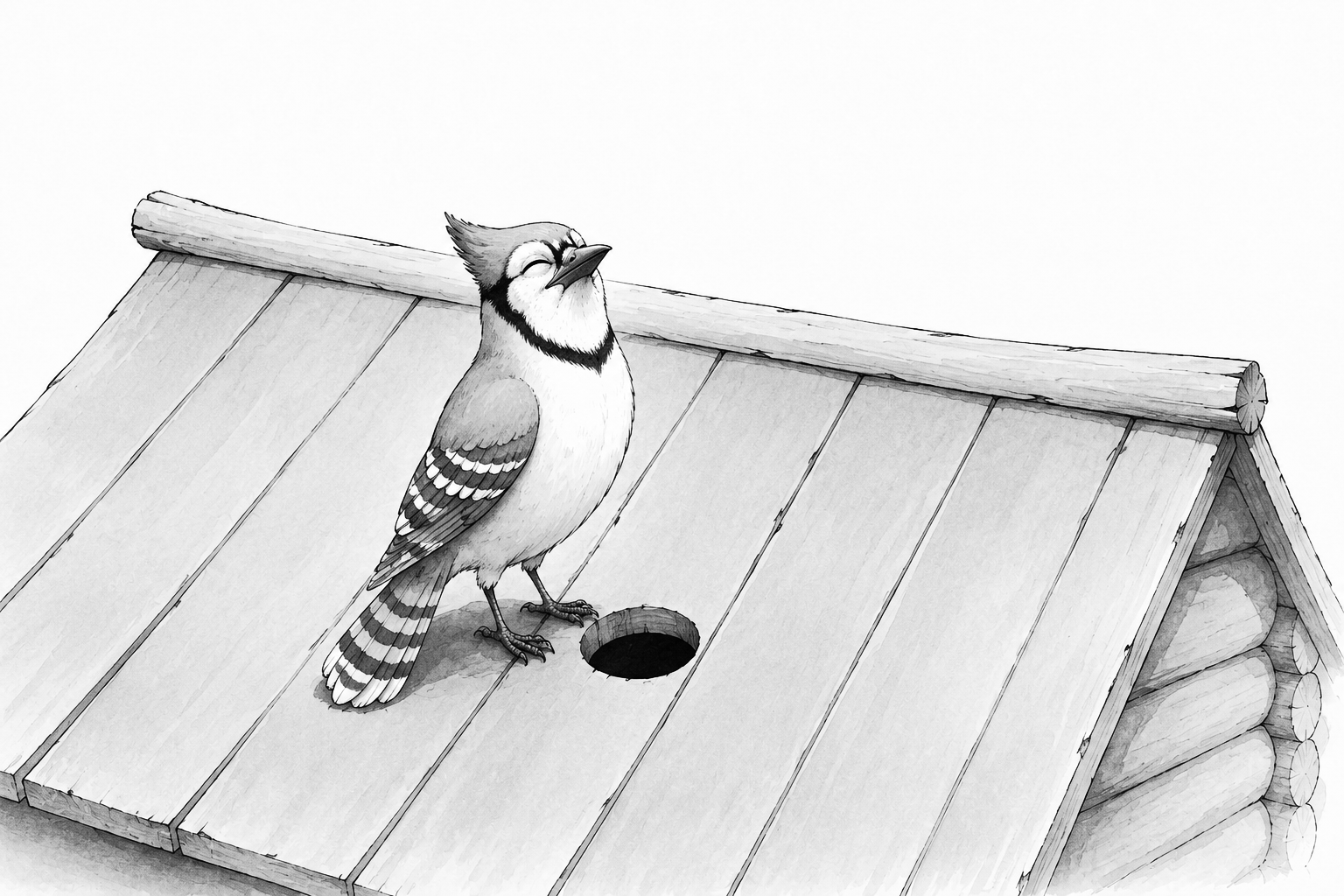
“When I first begun to understand jay language correctly, there was a little incident happened here. Seven years ago, the last man in this region but me moved away. There stands his house—been empty ever since; a log house, with a plank roof—just one big room, and no more; no ceiling—nothing between the rafters and the floor. Well, one Sunday morning I was sitting out here in front of my cabin, with my cat, taking the sun, and looking at the blue hills, and listening to the leaves rustling so lonely in the trees, and thinking of the home away yonder in the states, that I hadn’t heard from in thirteen years, when a bluejay lit on that house, with an acorn in his mouth, and says, ‘Hello, I reckon I’ve struck something.’ When he spoke, the acorn dropped out of his mouth and rolled down the roof, of course, but he didn’t care; his mind was all on the thing he had struck. It was a knot-hole in the roof. He cocked his head to one side, shut one eye and put the other one to the hole, like a possum looking down a jug; then he glanced up with his bright eyes, gave a wink or two with his wings—which signifies gratification, you understand—and says, ‘It looks like a hole, it’s located like a hole—blamed if I don’t believe it is a hole!’
“Then he cocked his head down and took another look; he glances up perfectly joyful, this time; winks his wings and his tail both, and says, ‘Oh, no, this ain’t no fat thing, I reckon! If I ain’t in luck!—Why it’s a perfectly elegant hole!’ So he flew down and got that acorn, and fetched it up and dropped it in, and was just tilting his head back, with the heavenliest smile on his face, when all of a sudden he was paralyzed into a listening attitude and that smile faded gradually out of his countenance like breath off’n a razor, and the queerest look of surprise took its place. Then he says, ‘Why, I didn’t hear it fall!’ He cocked his eye at the hole again, and took a long look; raised up and shook his head; stepped around to the other side of the hole and took another look from that side; shook his head again. He studied a while, then he just went into the Details—walked round and round the hole and spied into it from every point of the compass. No use. Now he took a thinking attitude on the comb of the roof and scratched the back of his head with his right foot a minute, and finally says, ‘Well, it’s too many for me, that’s certain; must be a mighty long hole; however, I ain’t got no time to fool around here, I got to “tend to business”; I reckon it’s all right—chance it, anyway.’
“So he flew off and fetched another acorn and dropped it in, and tried to flirt his eye to the hole quick enough to see what become of it, but he was too late. He held his eye there as much as a minute; then he raised up and sighed, and says, ‘Confound it, I don’t seem to understand this thing, no way; however, I’ll tackle her again.’ He fetched another acorn, and done his level best to see what become of it, but he couldn’t. He says, ‘Well, I never struck no such a hole as this before; I’m of the opinion it’s a totally new kind of a hole.’ Then he begun to get mad. He held in for a spell, walking up and down the comb of the roof and shaking his head and muttering to himself; but his feelings got the upper hand of him, presently, and he broke loose and cussed himself black in the face. I never see a bird take on so about a little thing. When he got through he walks to the hole and looks in again for half a minute; then he says, ‘Well, you’re a long hole, and a deep hole, and a mighty singular hole altogether—but I’ve started in to fill you, and I’m damned if I don’t fill you, if it takes a hundred years!’
“And with that, away he went. You never see a bird work so since you was born. He laid into his work like a nigger, and the way he hove acorns into that hole for about two hours and a half was one of the most exciting and astonishing spectacles I ever struck. He never stopped to take a look anymore—he just hove ’em in and went for more. Well, at last he could hardly flop his wings, he was so tuckered out. He comes a-dropping down, once more, sweating like an ice-pitcher, dropped his acorn in and says, ‘Now I guess I’ve got the bulge on you by this time!’ So he bent down for a look. If you’ll believe me, when his head come up again he was just pale with rage. He says, ‘I’ve shoveled acorns enough in there to keep the family thirty years, and if I can see a sign of one of ’em I wish I may land in a museum with a belly full of sawdust in two minutes!’
“He just had strength enough to crawl up on to the comb and lean his back agin the chimbly, and then he collected his impressions and begun to free his mind. I see in a second that what I had mistook for profanity in the mines was only just the rudiments, as you may say.
“Another jay was going by, and heard him doing his devotions, and stops to inquire what was up. The sufferer told him the whole circumstance, and says, ‘Now yonder’s the hole, and if you don’t believe me, go and look for yourself.’ So this fellow went and looked, and comes back and says, ‘How many did you say you put in there?’ ‘Not any less than two tons,’ says the sufferer. The other jay went and looked again. He couldn’t seem to make it out, so he raised a yell, and three more jays come. They all examined the hole, they all made the sufferer tell it over again, then they all discussed it, and got off as many leather-headed opinions about it as an average crowd of humans could have done.
“They called in more jays; then more and more, till pretty soon this whole region ’peared to have a blue flush about it. There must have been five thousand of them; and such another jawing and disputing and ripping and cussing, you never heard. Every jay in the whole lot put his eye to the hole and delivered a more chuckle-headed opinion about the mystery than the jay that went there before him. They examined the house all over, too. The door was standing half open, and at last one old jay happened to go and light on it and look in. Of course, that knocked the mystery galley-west in a second. There lay the acorns, scattered all over the floor.. He flopped his wings and raised a whoop. ‘Come here!’ he says, ‘Come here, everybody; hang’d if this fool hasn’t been trying to fill up a house with acorns!’ They all came a-swooping down like a blue cloud, and as each fellow lit on the door and took a glance, the whole absurdity of the contract that that first jay had tackled hit him home and he fell over backward suffocating with laughter, and the next jay took his place and done the same.
“Well, sir, they roosted around here on the housetop and the trees for an hour, and guffawed over that thing like human beings. It ain’t any use to tell me a bluejay hasn’t got a sense of humor, because I know better. And memory, too. They brought jays here from all over the United States to look down that hole, every summer for three years. Other birds, too. And they could all see the point except an owl that come from Nova Scotia to visit the Yo Semite, and he took this thing in on his way back. He said he couldn’t see anything funny in it. But then he was a good deal disappointed about Yo Semite, too.”
Baker’s Blue-Jay Yarn, Told Once More
A modern retelling by R. M. Hume
Let me tell you something about bluejays. You may call a jay a bird. Well, so he is, in a measure. But he has got feathers on him, and he don’t belong to no church, perhaps, and otherwise he is just as much a human being as you be.
A jay hasn’t got any more principle than a Congressman. A jay will lie, a jay will steal, a jay will deceive, a jay will betray, and four times out of five a jay will go back on his solemnest promise. And a jay can out-swear any gentleman in the mines.
But a jay can cry, and a jay can laugh, and a jay can feel shame. A jay can reason and plan and argue. A jay loves gossip. A jay has got a sense of humor, and a jay knows when he is an ass just as well as you do, and maybe better. If a bluejay ain’t people, he might as well take down his sign.
Now here’s a true thing I saw with my own eyes. Seven years back, the last neighbor I had in this country moved off, and left his house standing empty, over yonder. Just a log house with a plank roof, one big room, no ceiling, nothing between the rafters and the floor. One Sunday morning I was sitting out front here with my cat, taking the sun, feeling about as lonesome as a man can feel, when a bluejay lit on that roof with an acorn in his mouth and says, “Hello, I reckon I’ve struck something.”
He’d found a knot-hole in the roof. He cocked his head, shut one eye, put the other one down to the hole like a possum looking down a jug, and his whole face lit up. “It looks like a hole, it’s located like a hole,” he says. “Blamed if I don’t believe it is a hole. Why, it’s a perfectly elegant hole.” So he fetched the acorn and dropped it in, and tilted his head back with the heavenliest smile you ever saw, waiting to hear it land.
He didn’t hear it land. That smile faded off his face like breath off a razor, and the queerest look of surprise took its place. “Why, I didn’t hear it fall,” he says. He looked in the hole. He walked clean around it and looked in from the other side. He studied it from every point of the compass. Then he set another acorn in and tried to snap his eye to the hole quick enough to catch it going, and missed. He tried again. He couldn’t make heads nor tails of it. And then, friends, he got mad. He walked up and down the comb of that roof muttering to himself, and finally he just cussed himself blue in the face.
When he’d worked that off, he squared his shoulders and says, “All right. I don’t understand you, but I’ve started to fill you, and I will fill you, if it takes a hundred years.” And he laid into it like a man possessed. For two and a half hours that bird hove acorns down that hole fast as he could carry them, never stopping to look, just in and gone and back for more, till he could hardly flap his wings. At last he flopped down, sweating like an ice-pitcher, dropped one more in, and bent down for a look, certain he had her beat this time. When his head came up he was pale with rage. “I have shoveled in acorns enough to keep the family thirty years, and if I can see a sign of one of them, I wish I may land in a museum with a belly full of sawdust.”
Well, another jay came by and stopped to ask what the trouble was, and the sufferer told him the whole tale and said go look for yourself. So he looked, and came back, and asked how many he’d put in. “Not any less than two tons,” says the sufferer. That jay looked again, and couldn’t figure it, and raised a yell, and pretty soon there were jays coming from every direction, till the whole country had a blue flush to it, five thousand of them, every one putting his eye to that hole and offering a more chuckle-headed opinion than the jay before him.
They looked the house over, too. The door was standing half open, and at last one old jay lit on it and looked inside. And that knocked the mystery galley-west in a second. There lay the acorns, scattered all over the floor. He raised a whoop. “Come here, everybody,” he says. “Hang’d if this fool ain’t been trying to fill up a whole house with acorns.”
They came swooping down like a blue cloud, and as each one lit on that door and took a look, the whole size of what that first jay had tackled hit him, and he fell over backward suffocating with laughter, and the next one took his place and did the same. They roosted on the roof and the trees for an hour and guffawed over it like Christians. Don’t ever tell me a bluejay hasn’t got a sense of humor.
They brought jays here from all over the country to look down that hole, every summer for three years, and every one of them could see the joke, except one owl that came all the way from Nova Scotia to visit Yosemite, and took it in on his way home. He said he couldn’t see anything funny in it. But then, he’d been a good deal disappointed in Yosemite, too.
What Twain Was Doing
Mark Twain published this in A Tramp Abroad in 1880, inside a book that is nominally a walking tour of Europe and is mostly an excuse to stop and tell stories. It arrives with almost no setup. Twain introduces a middle-aged, simple-hearted miner named Jim Baker who has lived in a lonely corner of California for years, among the woods and the mountains, studying his only neighbors, the beasts and the birds, until he believes he can translate anything they say. Then Baker starts talking about bluejays and does not stop until he has delivered one of the best sustained comic set pieces Twain ever wrote.
The frame matters more than it looks. Baker is alone, and Twain establishes that before anything else happens. A man with no neighbors left has spent years listening to birds and has concluded that they are people. Nothing in the story asks you to doubt him, and that is the setup for the trick Twain is about to run. Once you have agreed that a jay is a person, everything the jay does lands as human behavior rather than as animal comedy.
And what the jay does is work. He looks. He tests. He tries again. He gets angry. He works harder. Then he calls in the neighbors, and the neighbors look for themselves and agree with him completely. Twain lets him be dead serious about all of it, and that is what makes it funny.
Twain is not laughing at the effort. The bird works harder than anybody has a right to work over a hole in a roof. The joke is that nobody ever thinks to look somewhere else.
There is a version of this story where somebody reasons it out, and it is a much smaller joke. Twain’s version is that nobody does.
A Note on This Edition
Twain’s words sit here as he wrote them, untouched, with short notes for what has aged out of common knowledge. The new material, the retelling and these notes, was written by R. M. Hume with the help of AI. Hume chose the story, wrote it, and made the editorial calls about what stayed and what was changed.
Twain’s 1880 text uses a racial slur once, as an offhand intensifier. We leave the original word in Twain’s text, with a note identifying it as period language, because covering it up would let us skip seeing where a writer we admire stood in his own time. The modern retelling does not use it.
The illustrations in the graphic-novel edition were generated with an AI image tool, then chosen, corrected, and placed by hand, one panel at a time, and a good many were thrown away. Twain writes that the flock studied the hole from every point of the compass, meaning one bird circling it over time, and the tool returned six birds standing on a roof at once. A metaphor handed to a language model can come back as an object. Catching that is a person’s job.
This is one of five stories in Mark Twain in an AI World, alongside The Celebrated Jumping Frog of Calaveras County, The Invalid’s Story, Journalism in Tennessee, and The Stolen White Elephant. Each sits beside Twain’s own text, word for word, so you can see exactly what was changed and what was not.
More on Twain’s method: How Twain Said to Tell It → · The Rulebook Twain Hid in an Insult →
Stay in the loop
New Twain editions and the occasional essay, straight to your inbox. Just that, nothing else.
You are joining updates from Mark Twain in an AI World. Just this, nothing else, unsubscribe anytime.